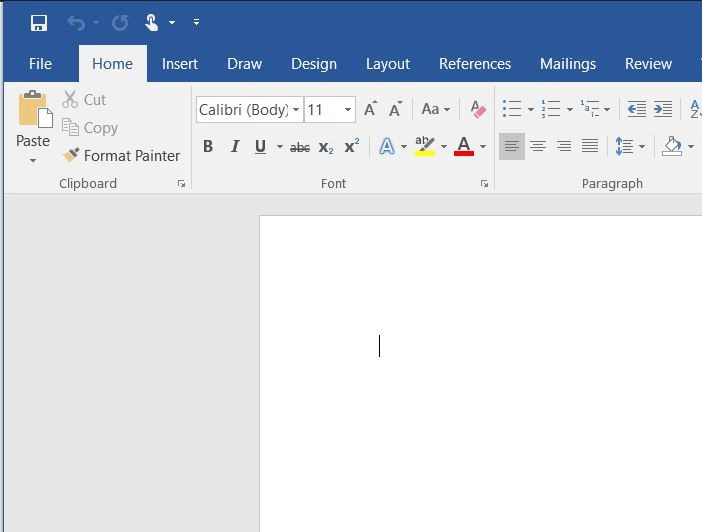
It had already been three or four hours since the sound of my dormmates’ footsteps, music, and voices quieted down. I looked at the large digital clock on my wall, which indicated in big, red digits, “4:00 AM”. It had already been six hours since I first turned on my laptop, sat down, and began staring at the monitor. I hadn’t moved from my desk during the entire six hours, not even to go to the bathroom. Yet, I had only written my name, the course number, and my teacher’s name. Otherwise, I had written nothing. I had deleted everything because each time I attempted to type something, I thought my ideas were somehow too shallow, lacking the profound insight and substance that was expected of me.
Growing up, I had always believed that I could overcome any challenge by investing time. In my mind, the amount of time spent on a task was my way of quantifying effort, and the amount of effort spent on a task directly correlated with the result. In other words, spending more time on any academic task guaranteed me an “A.” However, since becoming a high school student, I found that writing was an exception to the rule. No matter how much time I put into it, I was never good at it. I was got lost, and that night wasn’t an exception. I had literally spent six hours just staring at the blinking cursor. But I couldn’t give up. My assignment was due on Monday at 6:00 PM. Since it was 4:00 AM on Saturday, it meant I had less than 34 hours.
Rather than continuing to stare at the blank monitor, I decided to take a break and opened a folder in my laptop that contained my past writings. It was my last hope. Perhaps I could be inspired by one of them and start writing. However, as I perused through them, I found mostly writings that brought back only bad memories of getting a “B” or worse despite having invested many hours and even an entire weekend to write. They were full of teachers’ comments that read “interesting point but could be improved” or “need to develop and more insight.” Reading through my past writings and my teachers’ comments, I finally found my mistake. Although my writings fulfilled the assignments’ word requirements and contained no grammatical errors, because I didn’t think through my ideas and organize them before writing, my essays often consisted of ideas that were underdeveloped, confusing, and even contradictory.
Ironically, although there were less than 34 hours remaining until I had to submit the assignment, rather than writing, I had to move quickly to organize my ideas. And, despite the time crunch, I had to first catch a nap. After six hours of staring at the monitor, I could neither think straight nor read the class material with my fatigued, blood-shot eyes. So, after setting my alarm for 8 AM, I slept.
Next morning, I got up as soon as the alarm sounded. Rather than turning on my laptop, I took out a piece of paper and the books I had borrowed from the library to reference. Then, referring to the books, I catalogued my ideas and the examples on the piece of paper, making sure that all the ideas and examples fit and that they were logically organized without redundancies. Upon completion of this task, which took only 2 hours, looking at the piece of paper, I formed my thesis.
When I finally turned on my laptop, surprisingly, it took me no more than two minutes to complete the first sentence and no more than fifteen minutes to write the entire first paragraph. Believe it or not, it took me no more than two hours to write a five-page essay. So, I was done before noon on Sunday and was able to go out with a friend to enjoy a two-hour long brunch buffet at a nearby restaurant.
When I came back home and sat down on my chair to read the essay once again before I submitted it, I found that it, unlike other essays, had ideas that were consistent and more profound. Through this experience, I learned that the amount of time I spend on a task did not necessarily equate to the type of effort that the task required. More important than the amount of time invested was how the time was invested. With anything in life, preparation before doing enhances effectiveness and efficiency. Thus, although brainstorming on a piece of paper sounds like something that a middle school student may do in his or her first English class, it allowed me to get an “A” and also enjoy French toast for breakfast and a crème brûlée for desert with my friend at brunch, rather than spending the time staring at a blank monitor.
 Tristan Sunghoon Shin Blog